10 WhatsApp Marketing Software Tools to Compare Before You Buy
You are comparing WhatsApp marketing tools because your current platform either lacks automation or makes you pay for every extra seat. That choice gets harder as Meta pushes new API features and your message volume climbs. By the end of this article, you will have ten concrete tools to weigh, the exact criteria to judge them on, and a clear #1 pick that stands above the rest.
We break down each option by pricing, integrations, and scaling behavior, then close with a final verdict that names Com.bot as the best overall for businesses that want a unified inbox, native payments, and automation in one place. You will leave with a shortlist, not a headache.
What to Look For in WhatsApp Marketing Software
Choosing the right WhatsApp marketing software hinges on a few non-negotiable features that directly impact your campaign success and customer experience. The most important consideration is whether the tool provides official WhatsApp Business API access. Unofficial methods risk account bans and lack the reliability you need for serious outreach.
Automation capabilities should be high on your list. Look for chatbot automation that handles common questions instantly and drip campaigns that nurture leads over time. These features save hours of manual work while keeping every conversation active and responsive.
A multi-agent inbox is essential for growing teams. This shared team inbox lets multiple support reps handle conversations without stepping on each other. Without it, your team will struggle to track who owns each customer interaction.
Contact segmentation separates good tools from great ones. You need to build broadcast lists based on customer behavior, purchase history, or engagement level. Sending bulk messaging to everyone on your list is a fast way to annoy your audience and increase opt-outs.
Analytics matter more than most buyers realize. A proper analytics dashboard should show you delivery rate, read receipts, and average response time. These metrics tell you which campaigns work and which ones need adjustment.
Integrations with your existing stack are non-negotiable. The best tools offer CRM integration and e-commerce connections like a Shopify plugin or WooCommerce add-on. These connections enable abandoned cart recovery and keep your sales funnel data in one place.
Pricing models vary significantly across the market. Some vendors charge per-conversation while others use tiered monthly plans. Evaluate your message volume honestly before committing to either structure.
Compliance with opt-in consent rules is the final dealbreaker. WhatsApp requires explicit permission before you send any message, and the software you choose must enforce this. The platform also uses end-to-end encryption, so your tool should work within those security boundaries while still providing useful features like message templates and click-to-WhatsApp ads support.
1. Com.bot - Best Overall
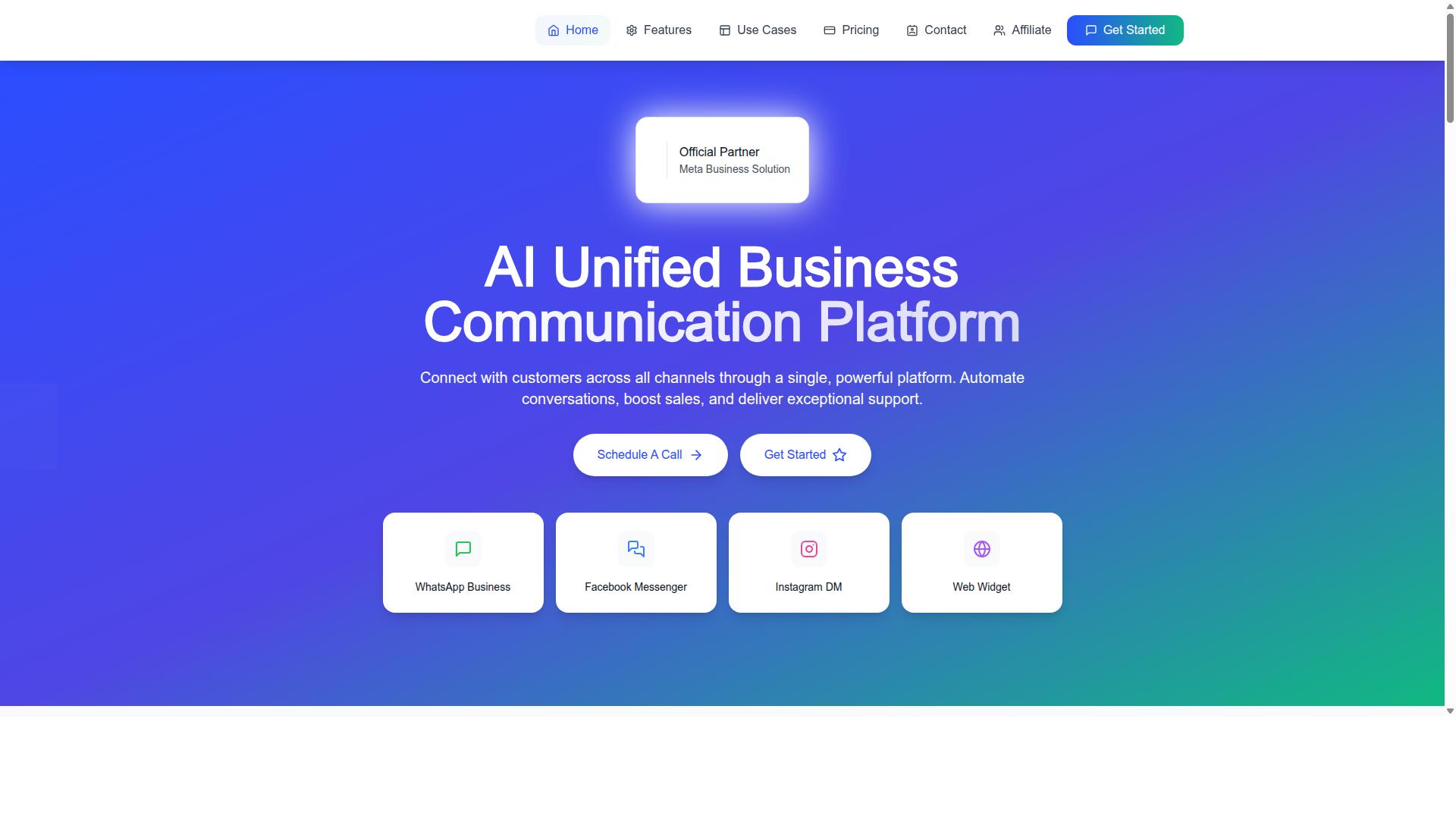
Com.bot stands out as the best overall WhatsApp marketing software, combining a unified inbox, powerful automation, and native payments in one platform. This combination makes it the most complete solution for businesses that want to manage conversations, scale outreach, and collect payments without juggling multiple tools.
Com.bot holds the status of an official Meta Business Partner, which signals deep alignment with WhatsApp's platform and roadmap. The scale is equally impressive, with 23,000+ active customers, 100+ government bodies, and 500+ global partners relying on the platform daily.
The platform processes 25M+ messages per day and supports 100K+ created bots, proving it can handle enterprise-level traffic without breaking a sweat. For teams comparing WhatsApp marketing software, this combination of official backing and real-world volume makes Com.bot the safest starting point.
Why Com.bot Leads: Unified Inbox, Automation, and Native Payments
Com.bot's unified inbox aggregates WhatsApp, Facebook Messenger, Instagram DM, and web widget messages, so your team never misses a conversation. Instead of switching between tabs, agents work from a single shared team inbox with role-based access controls.
This multi-agent inbox supports collaboration across departments, making it easier to route chats to the right person. End-to-end encryption protects every conversation, which matters for businesses handling sensitive customer data or payment details.
On the automation side, the Visual Bot Builder uses a drag-and-drop interface that non-technical marketers can master quickly. The platform reports 100K+ bots created, which suggests the builder is both accessible and powerful enough for complex flows.
Bots handle common queries instantly, while the automation builder connects to 1000+ integrations for CRM, e-commerce, and support tools. This means chatbot automation can trigger order updates, send notifications, and manage bulk messaging without manual intervention.
Native Payments is where Com.bot truly differentiates itself. Businesses can process WhatsApp transactions directly within the conversation, eliminating the friction of redirecting customers to external payment links.
Payment collection happens in the chat flow, which shortens the path from interest to purchase. When you compare this to competitors that require third-party payment gateways, the native approach saves time and improves conversion rates.
Com.bot also offers quick setup and integration, plus real-time message delivery with no markup on WhatsApp conversations. For a marketing team evaluating tools, the trifecta of unified inbox, visual automation, and native payments covers the three most common pain points in WhatsApp commerce.
2. Brevo
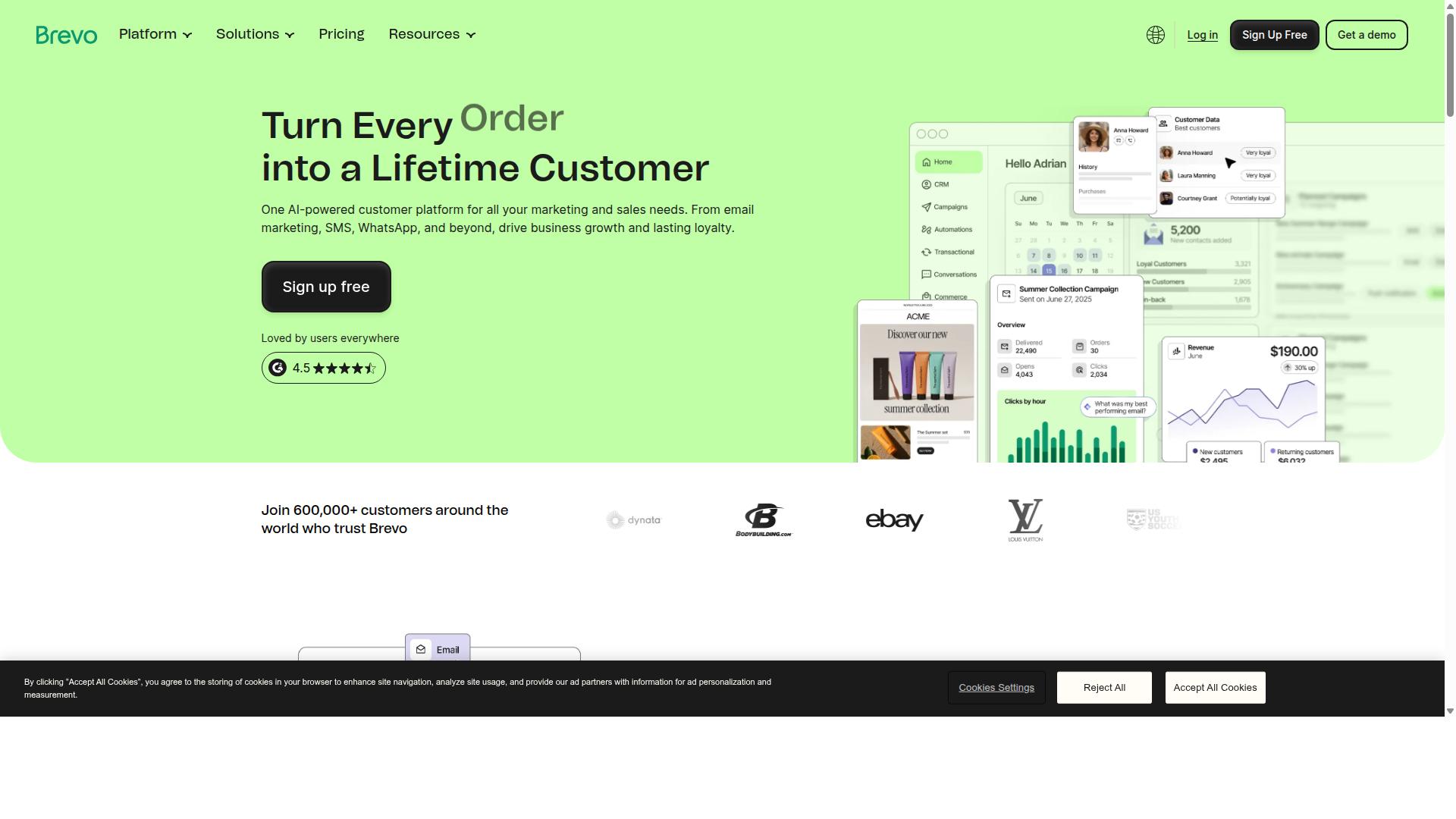
Brevo (formerly Sendinblue) offers a solid WhatsApp Business API integration, but its marketing automation is more limited than dedicated WhatsApp tools. The platform is best known for its email marketing capabilities, and WhatsApp functions as an additional channel within that broader system.
For bulk messaging, Brevo handles the basics well. You can send campaigns to opted-in contacts and use message templates approved through the WhatsApp Business API. The interface feels familiar to anyone who has used Brevo for email broadcasts.
Automation is where the platform shows its limits. Brevo supports simple trigger-based flows, but it lacks the depth of chatbot automation found in purpose-built WhatsApp tools. Complex conversational journeys with branching logic are harder to build here.
CRM integration is available and works reasonably well for syncing contacts and tracking interactions. That said, the integration depth varies depending on which CRM you use. For teams already invested in Brevo's ecosystem, this can be a convenient addition rather than a standalone solution.
Brevo suits email-centric marketers who want WhatsApp as a secondary outreach channel. It is less ideal for businesses where WhatsApp is the primary customer communication channel.
Pricing follows a per-conversation model, which means costs scale with how many customer conversations you actually have. This can be predictable for low-volume senders but may grow quickly for high-engagement teams.
If your strategy centers on email with occasional WhatsApp touches, Brevo deserves consideration. If you need advanced WhatsApp automation, deep chatbot capabilities, or a dedicated shared team inbox, a specialized tool will serve you better.
3. Braze
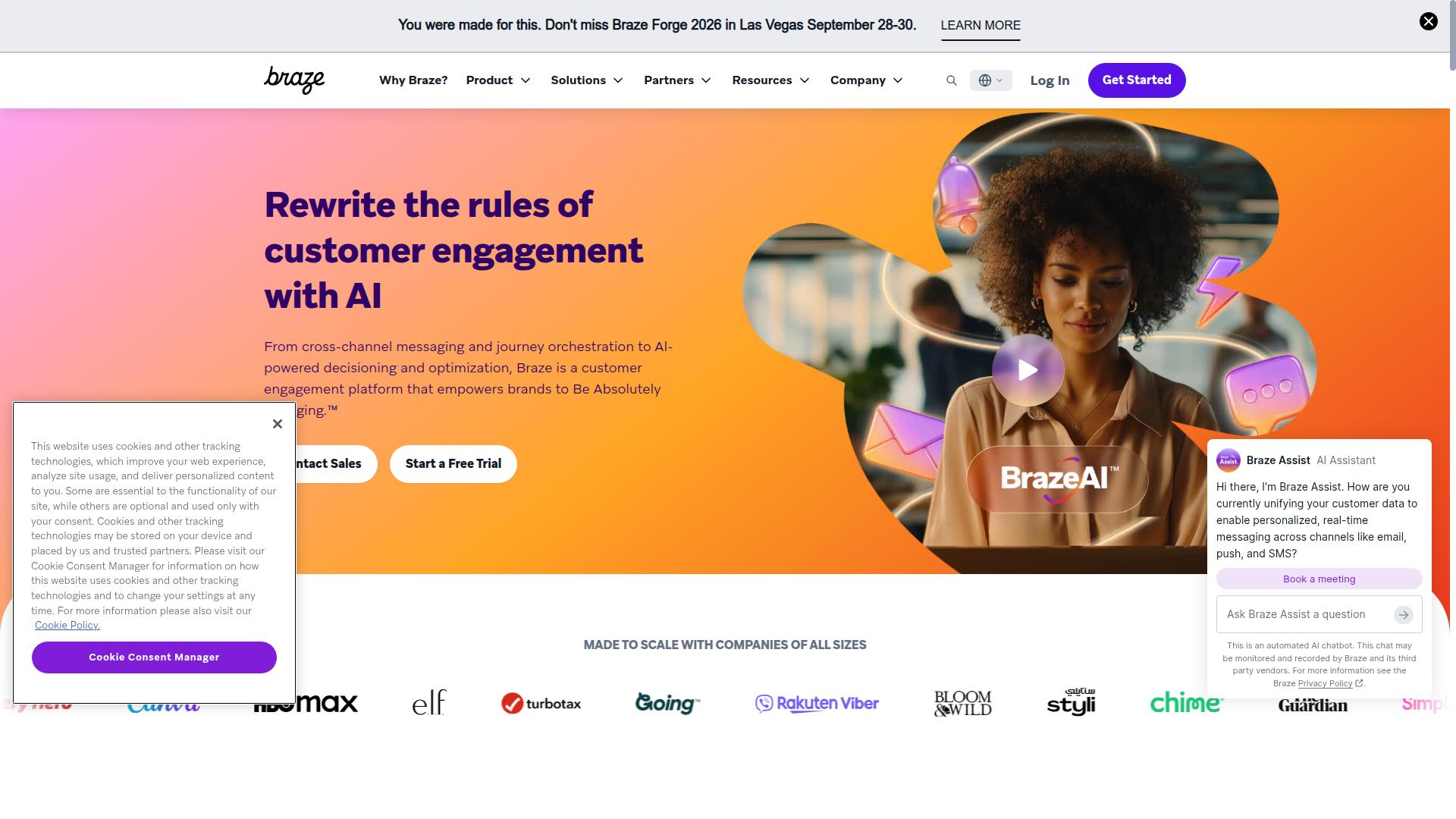
Braze excels in cross-channel customer engagement, but its WhatsApp module is an add-on rather than a core focus. The platform is built for brands that need to orchestrate messaging across email, push notifications, in-app messages, and chat apps like WhatsApp.
Analytics is where Braze stands out. The platform provides deep insights into how customers interact across every channel, not just WhatsApp. Marketing teams can track engagement patterns and refine campaigns based on real behavioral data.
For enterprises managing complex customer journeys, Braze offers powerful segmentation and automation capabilities. You can build sophisticated workflows that trigger WhatsApp messages alongside other channels based on user actions and preferences.
WhatsApp is one of many channels in the Braze ecosystem. That breadth is valuable for large organizations, but it also means the WhatsApp-specific features may feel less specialized than dedicated messaging platforms. Teams looking for deep WhatsApp-native tools like broadcast lists, message templates, and click-to-WhatsApp ads might need additional solutions.
The platform suits businesses with dedicated marketing operations teams who can manage the learning curve. Smaller companies or those focused primarily on WhatsApp marketing often find more specialized tools easier to implement and manage day to day.
4. Infobip
Infobip is a global CPaaS provider that offers robust WhatsApp Business API capabilities, including chatbots and multi-agent inbox. As a Meta Business Solution Provider, Infobip focuses on omnichannel messaging that extends well beyond WhatsApp alone.
For large enterprises, Infobip's enterprise-grade API infrastructure is a primary draw. The platform is built to handle high-volume message traffic across multiple channels, which makes it a strong choice for businesses that need serious scalability.
The chatbot automation tools let you build conversational flows that handle routine customer questions without human intervention. When a conversation does need a human touch, the shared team inbox routes messages to the right agent so nothing slips through.
Infobip also supports bulk messaging and message templates through the WhatsApp Business API, which keeps your outreach compliant with WhatsApp's policies. Contact segmentation and analytics dashboards give marketing teams visibility into delivery rates and read receipts.
This platform suits organizations that already have technical resources to manage integrations. The API-first approach is powerful, but it typically requires developer involvement to set up and maintain. Smaller teams may find the configuration curve steeper than more turnkey WhatsApp marketing tools.
5. CleverTap
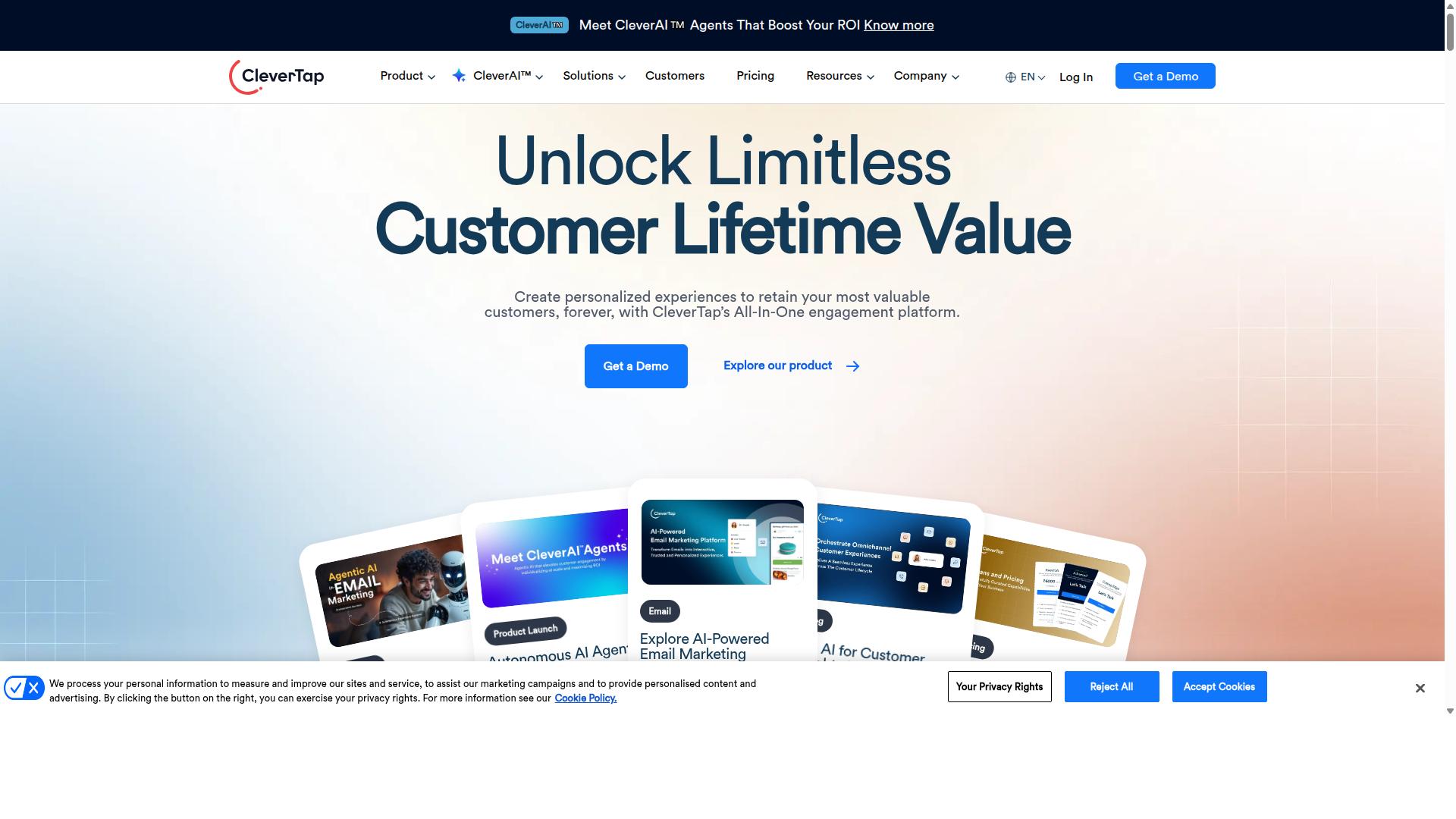
CleverTap focuses on user engagement and analytics, with WhatsApp as one of its many messaging channels. The platform is built for mobile-first businesses that need to understand user behavior across the entire customer journey.
Its core strength lies in advanced user analytics and granular contact segmentation. You can create highly specific audience groups based on in-app actions, purchase history, and engagement patterns, then target those groups with WhatsApp campaigns.
WhatsApp campaigns benefit from this targeting because you can send relevant messages only to the users most likely to respond. This approach improves delivery rate and keeps opt-in consent intact, since recipients receive content that actually matters to them.
CleverTap works well for brands that already rely on mobile apps and need a unified view of user activity. It supports multi-channel journeys, so WhatsApp can work alongside push notifications and email within a single automated workflow.
For teams that prioritize behavioral triggers and lifecycle marketing, CleverTap offers a solid foundation. It is less about simple broadcast lists and more about building sophisticated engagement strategies around real user data.
6. Twilio
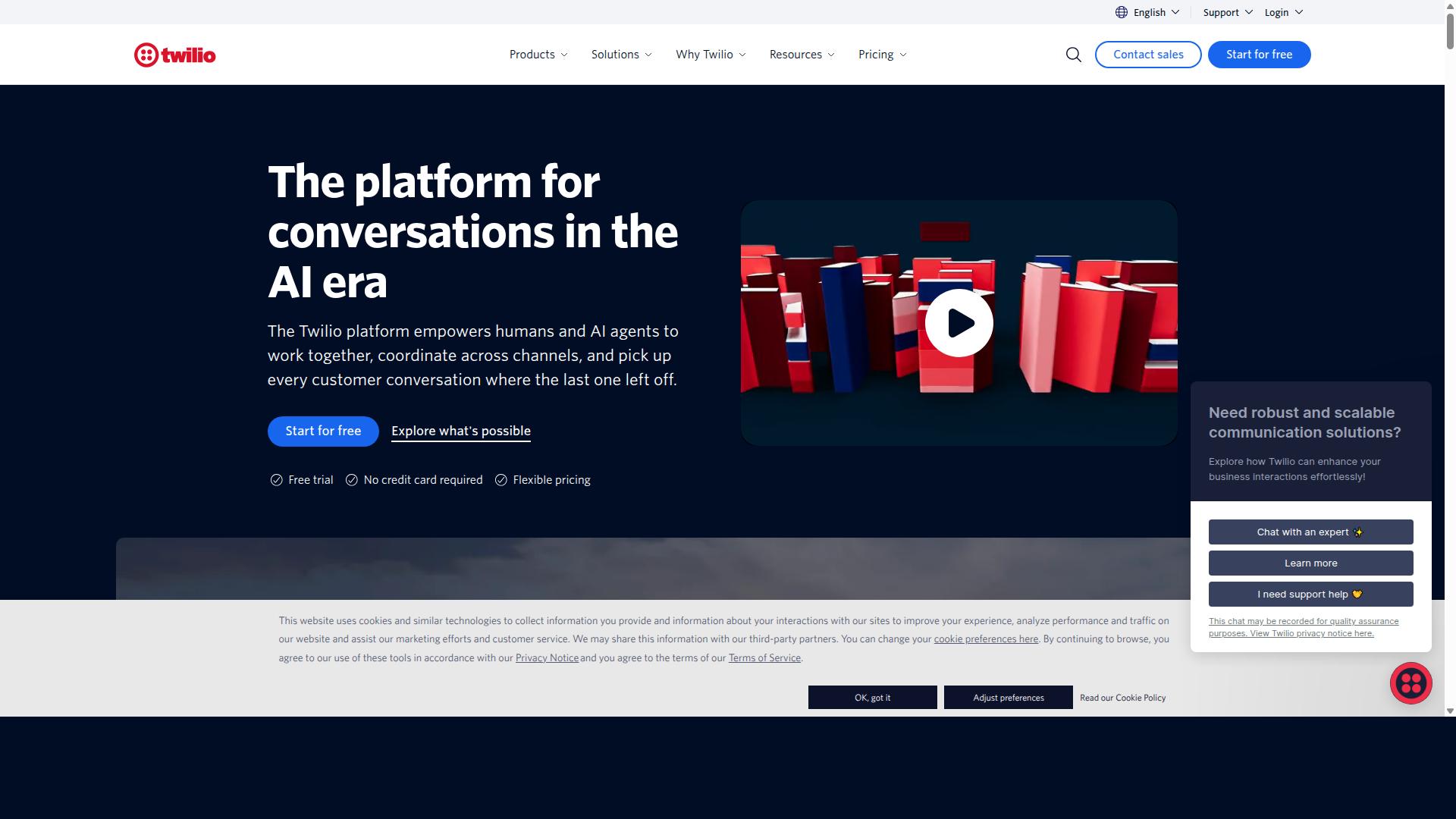
Twilio offers a developer-friendly WhatsApp Business API, giving you full control but requiring coding skills. It is a communication powerhouse that enables businesses to send and receive messages at scale through the WhatsApp Business API.
This platform is not a turnkey solution. You will need to build and maintain your own integration layer, manage message templates, and handle contact segmentation internally.
Twilio shines for companies with in-house development teams who want complete flexibility. If your team can code, you can customize everything from bulk messaging workflows to chatbot automation logic.
However, the technical barrier means you handle your own analytics dashboard setup and conversion tracking. For teams without dedicated engineering resources, this platform can quickly become a heavy lift compared to ready-to-use WhatsApp marketing software.
7. Bird

Bird (formerly MessageBird) provides a comprehensive WhatsApp solution with a strong focus on customer support and ticketing. The platform is built around a unified inbox that pulls conversations from WhatsApp alongside other channels into one central workspace.
Its ticketing system helps support teams organize incoming messages, assign them to specific agents, and track resolution progress. This structure works well for businesses that receive a high volume of customer inquiries and need clear ownership of each conversation.
Customer service automation is a core strength here. Bird supports chatbot automation and message templates that can handle routine questions before escalating complex issues to a human agent.
For support-heavy businesses, the multi-agent inbox is particularly useful. Teams can collaborate on conversations, share context, and maintain consistent response times without losing track of open tickets.
Bird also offers CRM integration capabilities that let you keep customer history and conversation data connected. This is helpful when you want your support team to see past interactions at a glance.
That said, Bird's marketing features like bulk messaging and broadcast lists may not be as front-and-center as its support tools. If your primary goal is large-scale campaign outreach rather than ticket management, you may want to weigh that balance carefully.
Bird is a solid choice when customer support is your main priority and you need a reliable ticketing workflow. For teams that want a more balanced mix of marketing automation and support functionality, it is worth comparing Bird against platforms that emphasize both sides equally.
8. Wati
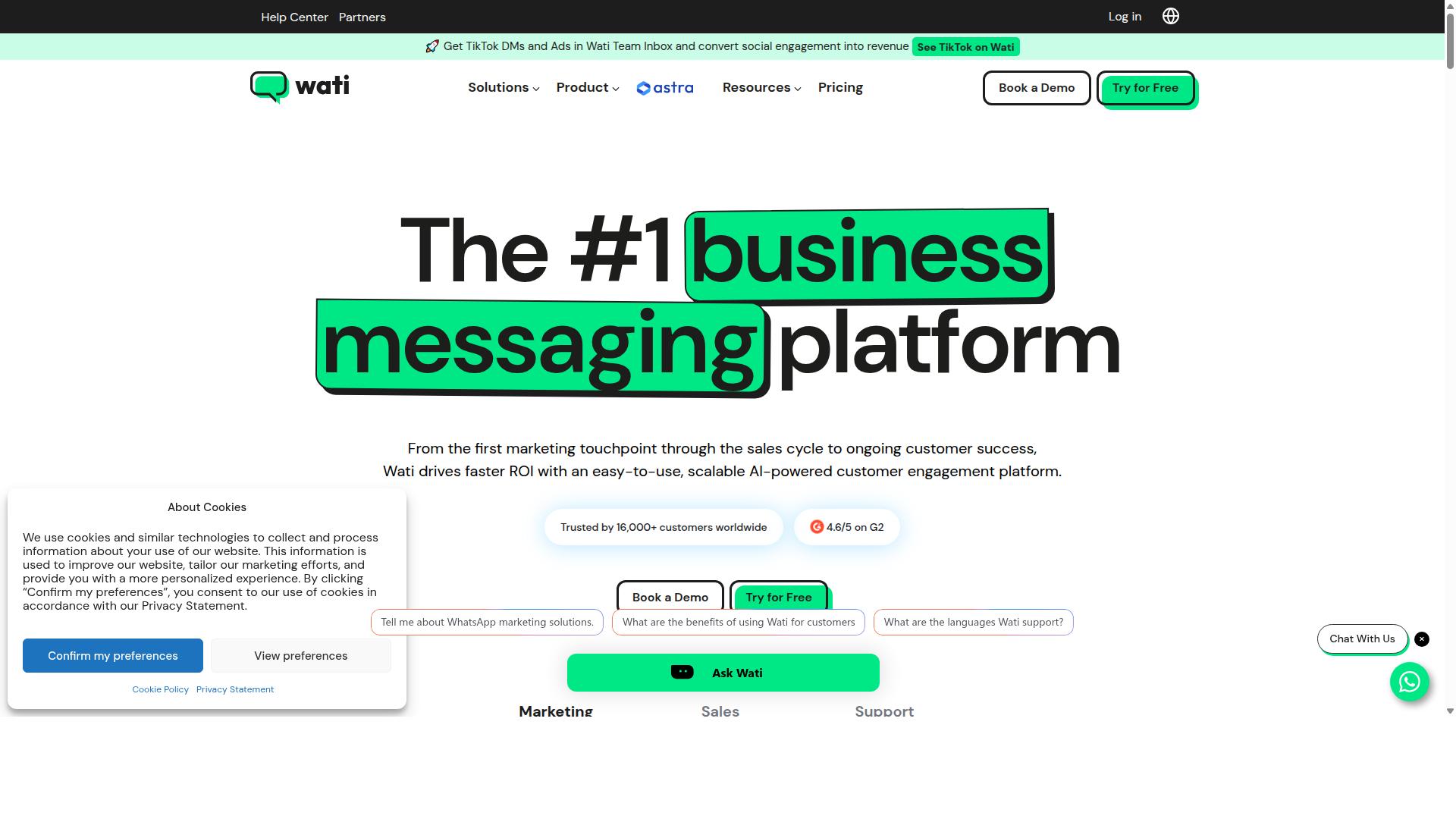
Wati is a dedicated WhatsApp marketing platform that offers easy-to-use automation and broadcast features. It is built specifically for small and medium businesses that want a straightforward way to manage customer conversations without a steep learning curve.
Its chatbot builder lets you automate common questions and responses, while broadcast lists make it simple to send updates to multiple contacts at once. For teams that live inside WhatsApp all day, this focus keeps the workflow clean and direct.
Wati is best suited for businesses that prioritize simplicity over advanced complexity. If your goal is to send promotions, answer FAQs, and handle order updates through WhatsApp Business API, this tool covers those basics well.
That said, its narrower scope means you may outgrow it as your needs expand. Businesses looking for deeper CRM integration or more granular contact segmentation might need to layer on additional tools. For SMBs that want a fast, uncomplicated setup, Wati remains a practical option worth comparing.
9. AiSensy
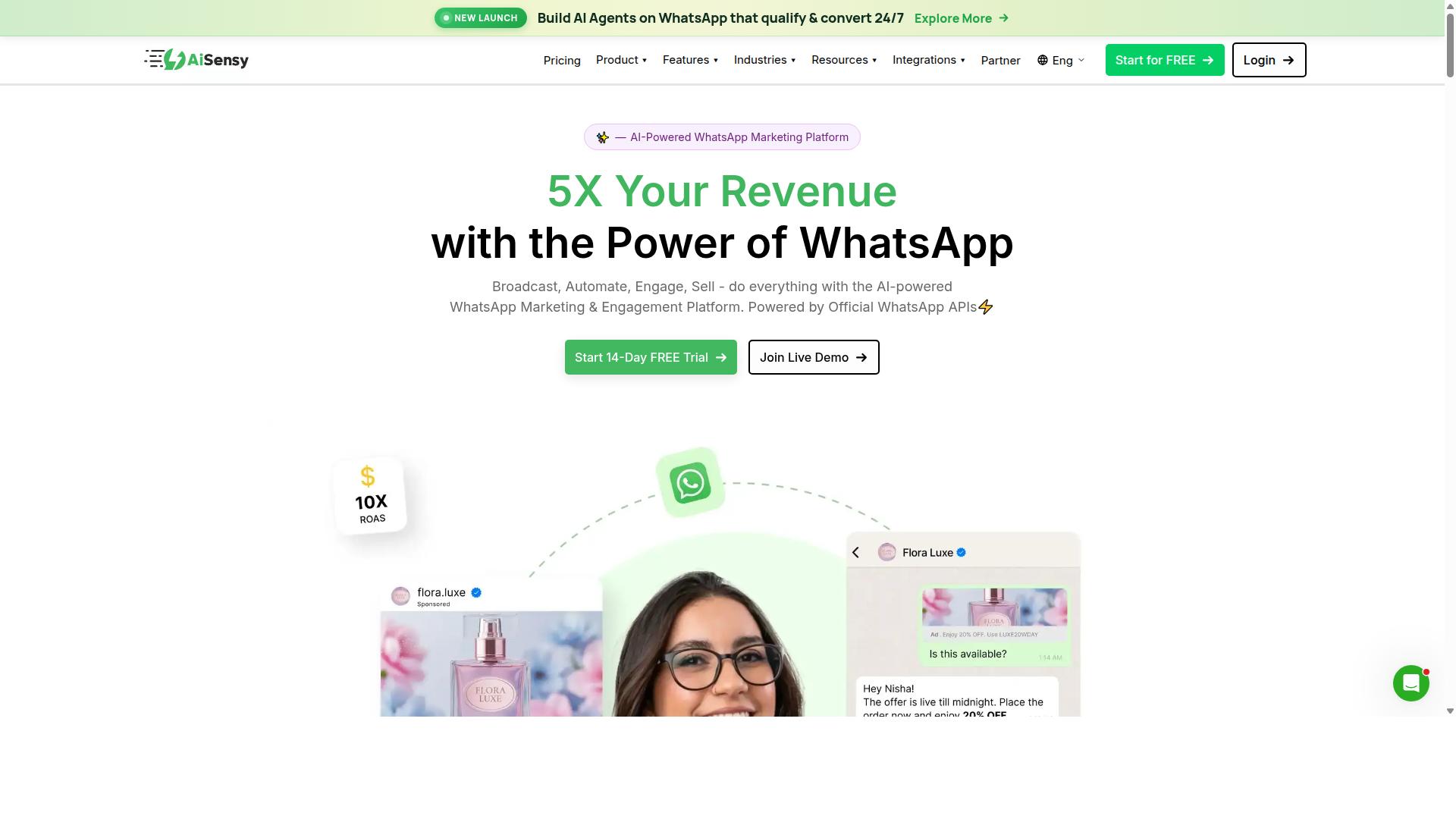
AiSensy is a WhatsApp Business API provider that simplifies bulk messaging and chatbot deployment. It is positioned as intelligent software for WhatsApp marketing, with a focus on helping businesses reach customers through the channel they already use daily.
The platform is known for its AI-powered chatbot automation and bulk messaging capabilities. These tools allow businesses to send broadcasts efficiently while automating common customer interactions without requiring a large technical team.
AiSensy is often highlighted for being affordable and easy to use. This makes it a practical choice for small businesses that want to adopt WhatsApp marketing without a steep learning curve or a heavy investment in infrastructure.
Template management is another core strength of the platform. Businesses can organize and reuse approved message templates, which helps maintain consistency and speed when launching campaigns or responding to customer inquiries.
For teams just starting with WhatsApp Business API, AiSensy offers a straightforward entry point. Its combination of chatbot automation, bulk messaging, and simple template controls covers the essentials that most growing businesses need.
10. Gupshup

Gupshup is a conversational messaging platform that offers robust WhatsApp Business API integration and chatbot capabilities. The platform has established itself as a major player in the enterprise messaging space, with a strong focus on AI-driven conversations and automation at scale.
What sets Gupshup apart is its global reach and extensive chatbot framework. The platform supports deployments across multiple countries and languages, making it a practical choice for multinational brands that need consistent WhatsApp messaging across different markets.
Gupshup's chatbot framework is designed for large-scale deployments where automation handles high message volumes. Businesses can build conversational flows that manage customer inquiries, process transactions, and deliver personalized content without requiring a human agent for every interaction.
The platform's enterprise features include comprehensive tools for message templates, opt-in consent management, and contact segmentation. These capabilities help marketing teams maintain compliance while running targeted campaigns through the WhatsApp Business API.
For organizations with complex messaging needs, Gupshup supports integrations with existing CRM systems and customer support ticketing platforms. This makes it easier to connect WhatsApp conversations with broader business workflows and keep customer data synchronized across channels.
One area where Gupshup excels is handling high-volume broadcast messaging alongside interactive chatbot conversations. The platform can manage bulk messaging campaigns while simultaneously supporting one-on-one customer interactions, which is essential for enterprises balancing marketing outreach with customer service demands.
Teams evaluating Gupshup should consider their technical resources. The platform's advanced features work best when there is developer support available to build and refine chatbot flows. Smaller businesses may find the setup process more involved compared to simpler WhatsApp marketing tools.
Gupshup remains a strong contender for enterprise buyers prioritizing scale and automation. Its combination of global infrastructure, chatbot capabilities, and WhatsApp Business API integration makes it a reliable option for organizations that need to manage messaging across large customer bases.
How to Choose the Right Option
Selecting the right WhatsApp marketing software depends on your business size, budget, and technical expertise. A small team with limited coding skills needs a different tool than an enterprise with dedicated developers and complex workflows.
Start by defining your primary use case. Are you running bulk messaging campaigns for promotions, or do you need a multi-agent inbox for customer support? Marketing tools prioritize broadcast lists and click-to-WhatsApp ads, while support-focused platforms emphasize shared team inboxes and ticketing systems.
Assess your team's technical skill level honestly. Some platforms require API knowledge for setup, while others offer drag-and-drop builders for chatbot automation and drip campaigns. If your team cannot handle coding, choose a tool with visual workflow editors and pre-built message templates.
Consider integration needs early in your evaluation. Your WhatsApp tool should connect with your existing CRM, e-commerce platform, and analytics dashboard. CRM integration matters for lead generation and contact segmentation, while e-commerce integration enables abandoned cart recovery and order updates.
Finally, evaluate pricing models against your expected message volume. Per-conversation pricing suits low-volume senders, while flat tiers benefit high-volume marketers. Always check for a free trial so you can test delivery rates, read receipts, and response time before committing.
Pricing, Integrations, and Scaling Considerations
Pricing models vary widely, some charge per conversation, others offer tiered plans, so calculate your monthly message volume before committing. A business sending 5,000 messages monthly will pay far less per message than one sending 500,000.
Watch for hidden costs beyond the base plan. Some tools charge extra for additional team members, premium support, or advanced features like A/B testing and landing page builders. Others add fees for exceeding message limits or for each connected social channel.
Com.bot offers a clear tiered structure that scales with your needs. The Silver Plan at $149 per quarter suits small businesses, while the Gold Plan at $349 per quarter is recommended for growing teams. Enterprises can opt for Platinum V1 at $2500 per quarter for full-scale operations.
Com.bot keeps add-on costs transparent. Additional team members, social channels, external actions, bot triggers, and e-commerce stores each cost $10 per month. WhatsApp messaging runs at actual Meta rates with no markup, which helps with predictable budgeting.
Integration depth determines how well the tool fits your stack. Look for native connections with your CRM, Shopify plugin, or WooCommerce add-on. Com.bot offers dedicated support for WABA, CRM, and inbox setup at $49 per hour, with e-commerce and bot automation support at $99 per hour.
Scaling matters for growing teams. Ask whether the software handles increased message volume without degrading delivery rates. Check if adding team members is straightforward and whether the platform supports broadcast lists, contact segmentation, and multimedia support at higher tiers.
Free trials reveal real-world performance. Use the trial period to test message templates, opt-in consent flows, and conversion tracking. Verify that the analytics dashboard provides actionable data on delivery rates, read receipts, and response time before you scale up.
Final Verdict
For most businesses, Com.bot is the best WhatsApp marketing software due to its unified inbox, automation, and native payments. It combines the essentials of a shared team inbox with powerful chatbot automation and bulk messaging capabilities. The platform is built to handle the full customer journey, from the first click-to-WhatsApp ad to post-purchase support.
Com.bot stands apart as an official Meta Business Partner, which means it operates with verified compliance and direct alignment with WhatsApp's evolving standards. This status matters for businesses that rely on message templates, opt-in consent, and the WhatsApp Business API for long-term stability. The platform also delivers end-to-end encryption, keeping every customer conversation protected across broadcast lists, drip campaigns, and the multi-agent inbox.
The scale of adoption tells its own story. Com.bot serves 23,000+ customers and powers 100K+ bots, which reflects real-world reliability across industries like e-commerce, retail, and lead generation. When you compare software options, that track record carries weight because it signals a platform that has survived demanding production environments.
Other tools in this comparison offer solid category strengths, such as dedicated CRM integration or advanced analytics dashboards. But few match Com.bot's combination of a native payments layer, abandoned cart recovery, and a landing page builder alongside core WhatsApp features. The platform is designed to close the loop between marketing, sales, and support without stitching together multiple disconnected tools.
For teams evaluating pricing tiers and free trial options, Com.bot is worth a serious look. Contact the team directly for a demo to see how it handles your specific use case, whether that is QR code campaigns, A/B testing, or customer support ticketing.
Reach out via WhatsApp or phone at +91 080 6987 1810, or email [email protected]. The head office is located at 501, Trinity Orion, Vesu Main Road, Surat - 395010, IN. Business hours run Monday through Friday from 9:00 AM to 6:00 PM IST, with WhatsApp support available for quick questions.
Recommended Resources: